

Multi-Node & Blade Servers
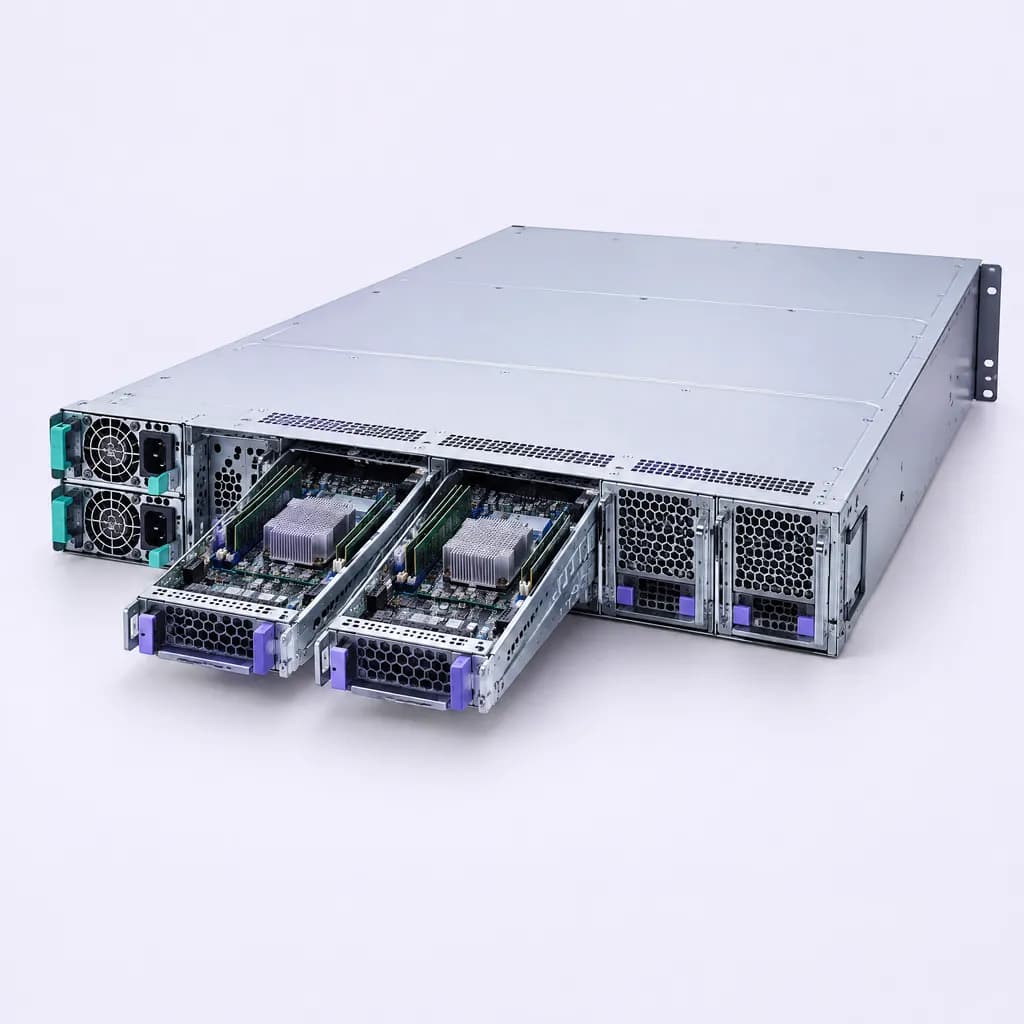
Multi-Node Chassis and Blade Servers for Dense Compute
Two to four-node chassis and blade enclosures that pack more compute into each rack unit, for hosting clusters, virtual desktops and high-performance computing. We quote the chassis, the nodes, the shared power and the management modules as one matched set.
| Condition | New (sealed) · Refurbished Grade A/B |
|---|---|
| Ships from | Dubai, UAE |
| Brands | Dell PowerEdge C-series and MX, HPE Apollo and Synergy, Lenovo ThinkSystem SD-series and Supermicro multi-node families; independent trader, no brand affiliation. |
| Typical models | PowerEdge C6520 and C6620 sleds in C6400 and C6600 chassis; PowerEdge MX7000 with MX750c sleds; HPE Apollo 2000 and Synergy 12000 frames; ThinkSystem SD530 and SD630 V2; Supermicro BigTwin and TwinPro |
| Form factor | 2U chassis holding two or four independent nodes, or blade enclosures of 7U to 10U holding many compute sleds with shared networking |
| Processor options | One or two Xeon Scalable or EPYC processors per node |
| Memory | Registered DDR4 or DDR5 per node, with fewer slots per node than a standard 1U or 2U server |
| Storage | Shared front drive bays split between nodes in multi-node chassis; mezzanine-attached or network storage on most blade systems |
| Ports & interfaces | Per-node OCP or mezzanine networking; blade enclosures add switch or pass-through modules and a chassis management module |
| Power | Shared redundant supplies feeding every node, on 200–240 V circuits for most configurations |
| Operating system | Shipped without an OS; enclosure management and per-node controller licences confirmed per unit |
| Testing & grading | Each node burned in and diagnosed separately, plus the chassis, supplies and management modules; firmware versions recorded across the set |
| Warranty basis | Maker cover depends on whether the manufacturer recognises the unit's original sales region; refurbished equipment carries the refurbisher's warranty where one is given. Each quote names the basis line by line. |
| Compliance & markings | Regulatory markings such as CE, FCC and RoHS are checked against the maker's published documentation for every model on the quote. |
| Packing | Chassis and nodes packed separately or pre-assembled as agreed; heavy enclosures palletised with the management and switch modules boxed |
| Order quantity | We do not set a minimum. A single replacement part, a pair of servers or a full rack row can all be quoted; tell us the real quantity. |
| Lead time | Stated in the written quote after the supplier confirms the exact part numbers, configuration and condition for your request. |
| Documents | Commercial invoice and packing list, a serial list covering chassis and drives, the supplier's burn-in or test log, a sanitization record for every previously used drive, and a certificate of origin where the destination requires one. |
- 15+ years export experience
- Price Beat Promise on written quotes
- Burn-in logs and drive records passed on
Best for
- Hosting clusters where rack space and power are charged by the unit
- Virtual desktop and hyper-converged clusters
- High-performance computing with many identical nodes
Further reading
- How to write a rack server bill of materials- Every line a supplier needs to quote a server
- Refurbished server inspection checklist- What to check before and after delivery
- Server generations explained- How Dell, HPE and Lenovo name their platforms
- Packing and shipping servers from Dubai- Cartons, pallets, air or sea
How we source Multi-Node & Blade Servers
Multi-node chassis put two or four complete servers in a 2U box that share power supplies and cooling. Each node has its own processors, memory and network ports, so you get density without giving up independence. They suit hosting providers and clusters where rack space and power are tight.
Blade enclosures go further: many compute sleds share power, cooling, networking and management in one frame. They reduce cabling and simplify management at scale, but they tie you to one maker's enclosure, switch modules and firmware. Check that the enclosure generation supports the sleds you want and that the interconnect modules suit your network before you commit.
With both designs, the shared components matter as much as the nodes. A quote should list the chassis or enclosure, the number and configuration of nodes, the power supplies, and the management and network modules. Refurbished sets are often good value, provided the chassis firmware and management modules are recent enough for the nodes.
Before you request a quote
Can I buy nodes for a chassis I already own?
Often, yes. Send the chassis model and generation and the configuration of the nodes already installed, and we look for matching sleds that the chassis firmware supports.
Are multi-node servers louder or hotter than standard servers?
They concentrate more heat in each rack unit, so they need good cold-aisle airflow and enough power per rack. Noise is similar to other rack equipment in a data hall.
Related product lines
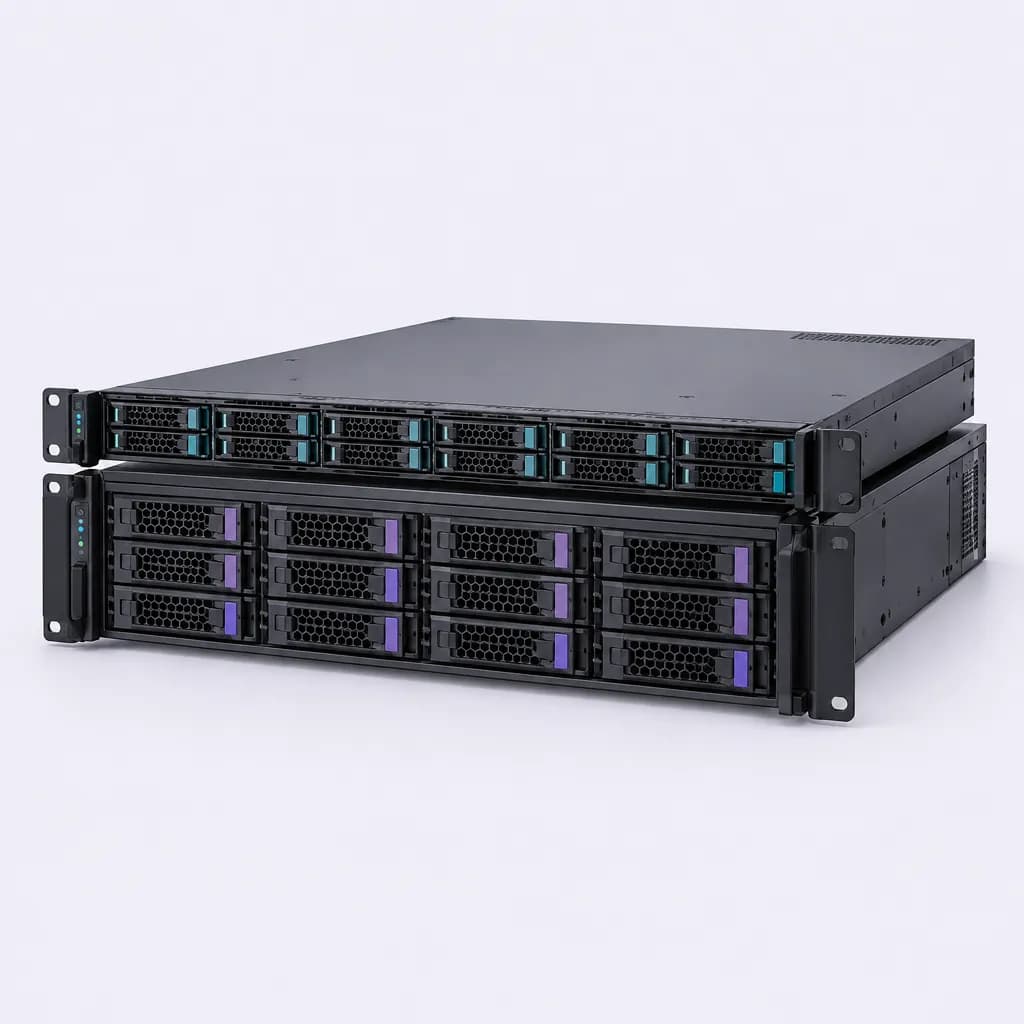
Rack Servers
1U · 2U · 4U · Xeon or EPYC · redundant PSUs
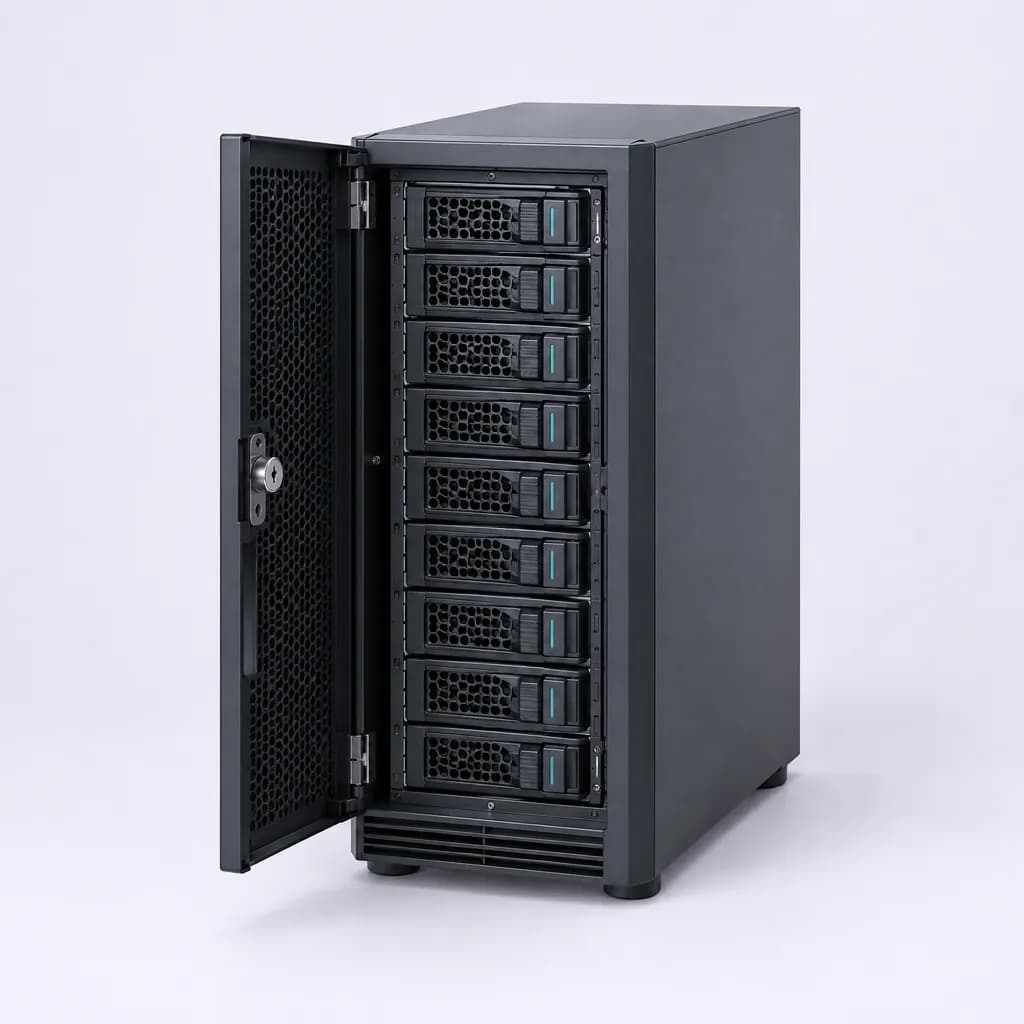
Tower Servers
Pedestal · Xeon E or Xeon Scalable · ECC · hot-swap bays
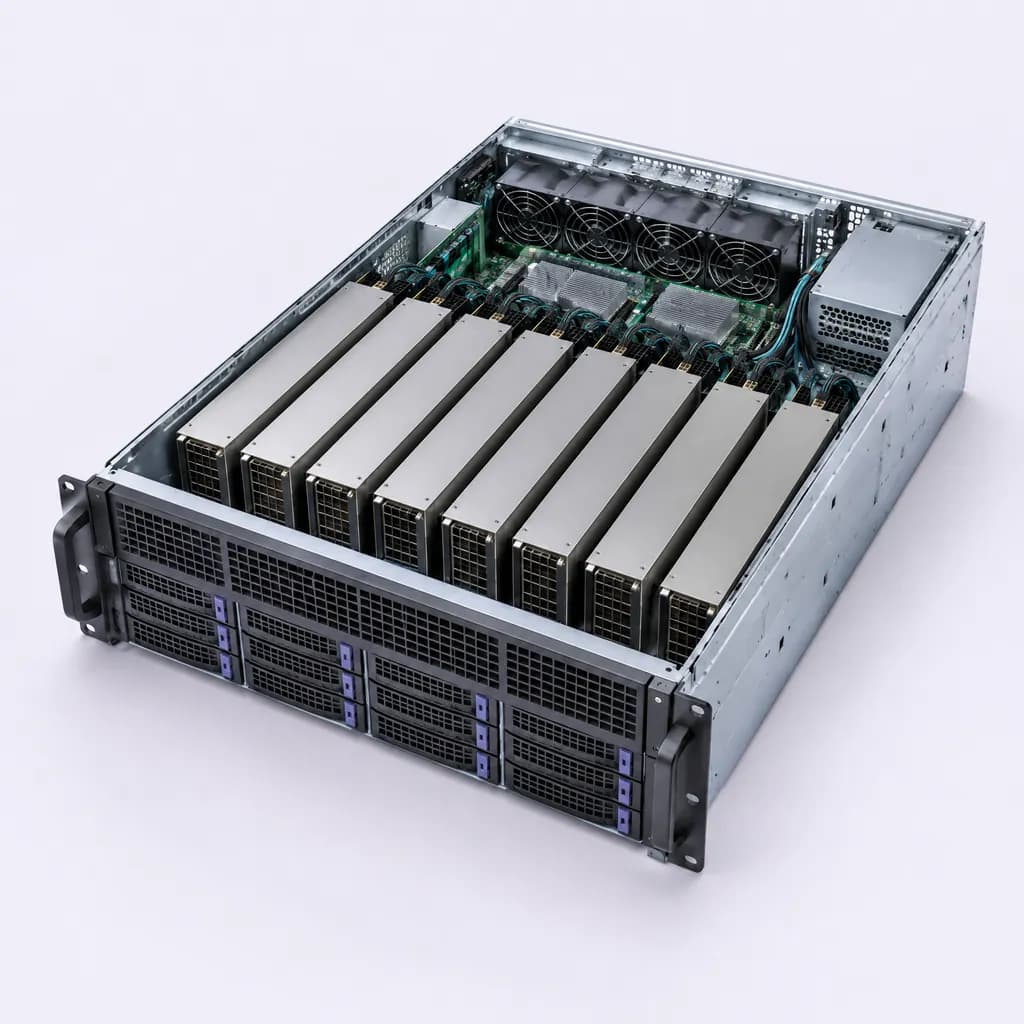
GPU Servers
2U–8U · 2 to 8 accelerators · PCIe or SXM/OAM